
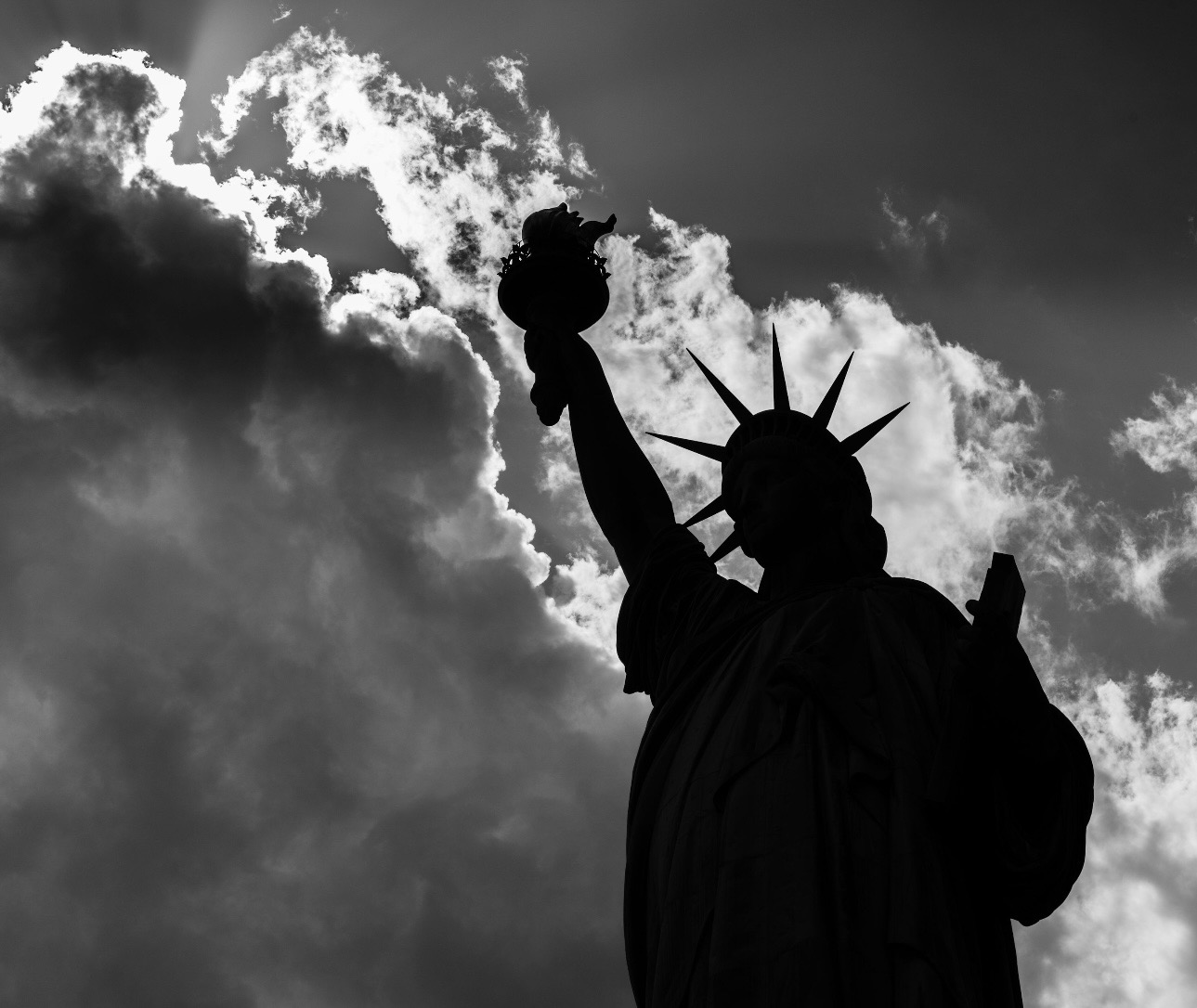
Projection and Power: The Psychology of US Empire
When Sigmund Freud reportedly described America as “a gigantic mistake,” he was not analyzing politics or foreign policies. He was responding to a culture that appeared to him unusually optimistic, pragmatic, self-confident, and resistant to acknowledging tragedy, aggression, and the unconscious conflicts that shape human life. Freud had built his theory on the premise that human beings are not governed primarily by reason or goodness, but by unconscious conflict like aggression, repression, and ambivalence.
What unsettled him was not democracy or the political setup but denial.
Freud’s central claim in Civilization and Its Discontents was simple and devastating: civilization rests on the repression of aggression. Human beings harbor destructive impulses toward domination, rivalry, and control, and societies survive only by containing them. But repression, which remains unattained, has consequences. What cannot be acknowledged internally returns externally.
When a nation constructs its identity around freedom, moral righteousness, and exceptional virtue, it creates a powerful collective superego, an internal voice that insists: we are the defenders of liberty. This superego does not tolerate doubt easily. It cannot easily admit self-interest or aggression without destabilizing the narrative of innocence.
And so aggression must be projected. Projection, in psychoanalytic terms, occurs when a subject disowns an impulse and attributes it to another. The hostility one cannot bear in oneself becomes the threat one sees in others.
In geopolitics, projection looks like this:
“We do not dominate; we stabilize.”
“We do not invade; we liberate.”
“We do not seek control; we ensure security.”
The language shifts, but the structure remains.
Consider the historical record. In 1953, the CIA helped orchestrate the overthrow of Iran’s Prime Minister after oil nationalization threatened Western energy interests. The intervention was framed as a defense against communism. In 1973, U.S. involvement preceded the Chilean coup that installed Pinochet. In 2003, Iraq was invaded under the assertion of weapons of mass destruction; these claims were later discredited. Afghanistan endured two decades of occupation. Sanctions regimes targeting Iran and Venezuela are described as moral pressure while contributing to civilian economic collapse.
These are not random errors. They reflect a recurring dynamic: strategic and economic objectives pursued under moral justification. Freud would not have reduced this to greed alone. He would have asked: What unconscious anxiety sustains this pattern? A nation founded on the myth of limitless freedom must constantly defend that myth. Freedom becomes not only a principle but an identity. To question it is to threaten the self.
This produces what Freud called narcissism; not vanity, but overinvestment in self-image. The United States, through decades of global dominance — military, financial, institutional — developed a self-concept of indispensability. Dollar hegemony, NATO alliances, control over global financial institutions, and unmatched military reach reinforce this identity.
But narcissism is fragile.
The stronger the self-image, the more intolerable the contradiction becomes. When alternative powers rise, when oil markets fluctuate, when regional actors assert autonomy, anxiety intensifies. That anxiety can manifest as preemptive force.
Donald Trump did not create this structure; he stripped it of subtlety. His withdrawal from the Iran nuclear deal, aggressive sanction regimes, and rhetorical normalization of unilateral action were not deviations from history. They were accelerations. He gave voice to impulses that had long operated beneath diplomatic language. In psychoanalytic terms, Trump functioned as the id unleashed within a structure that had long maintained a moral superego. He spoke about the aggression openly. The system allowed it because the system had always contained it.
But projection does not eliminate aggression. It externalizes it. And when aggression is consistently externalized, instability spreads. Oil politics reveal the intersection of economics and unconscious fear. Energy control is not merely material; it symbolizes sovereignty. To lose leverage over energy markets is to lose dominance. And dominance, once normalized, becomes inseparable from security.
Freud also wrote of the death drive, which is a human tendency toward repetition, destruction, and compulsion beyond rational self-interest. Civilizations, like individuals, can become trapped in repetitive cycles of domination even when those cycles produce long-term instability. War begets insecurity. Insecurity justifies further militarization. Militarization breeds resentment. Resentment feeds conflict.
The cycle continues.
This analysis does not absolve other regimes of repression or violence. Authoritarianism exists across regions. Nuclear ambitions are real concerns. But psychoanalysis insists on symmetry: the aggression one condemns externally must be recognized internally.
Moral language does not neutralize power. It sanctifies it.
The anger many feel toward American interventionism is not mere ideology. It is a response to perceived hypocrisy and the gap between professed universal values and selective application. One nation’s weapons are deterrence; another’s are an existential threat. One nation’s sanctions are justice; another’s are coercion.
Projection allows this contradiction to persist without the collapse of self-image.
Freud warned that civilization demands self-restraint. Aggression cannot be eliminated, but it can be acknowledged and contained. When a nation denies its aggressive impulses while institutionalizing them globally, containment fails. The world we inhabit now is marked by proxy wars, sanction regimes, energy crises, and ecological collapse reflect not only geopolitical strategy but psychological structure.
No state is purely villain or hero. But disproportionate power demands disproportionate introspection. The greater the dominance, the greater the ethical burden. If freedom becomes untethered from relational accountability, it transforms into the extraction of oil, labor, land, and atmosphere. The planet cannot survive unlimited expansion justified by moral exceptionalism.
Freud’s unease was not about democracy and the political system. It was about denial. A culture that refuses to confront its unconscious aggression risks enacting it repeatedly, each time in the name of virtue.
Anger at the empire is understandable. But the deeper task is recognition. Until power can admit its own shadow, it will continue to project it. And projection, left unchecked, always returns.
Related Posts

Why Do We Say ‘Yes’ When We Really Mean ‘No’? A Relational Perspective
Saying “yes” when we really mean “no” is a common human experience. At the...

Why Do We Compare Ourselves to Others? A Relational Perspective
Comparison is an almost universal experience. Whether scrolling through social...